The Problem with Clever Ideas
Most creative ideas reveal themselves through what isn't working.
This one certainly did.
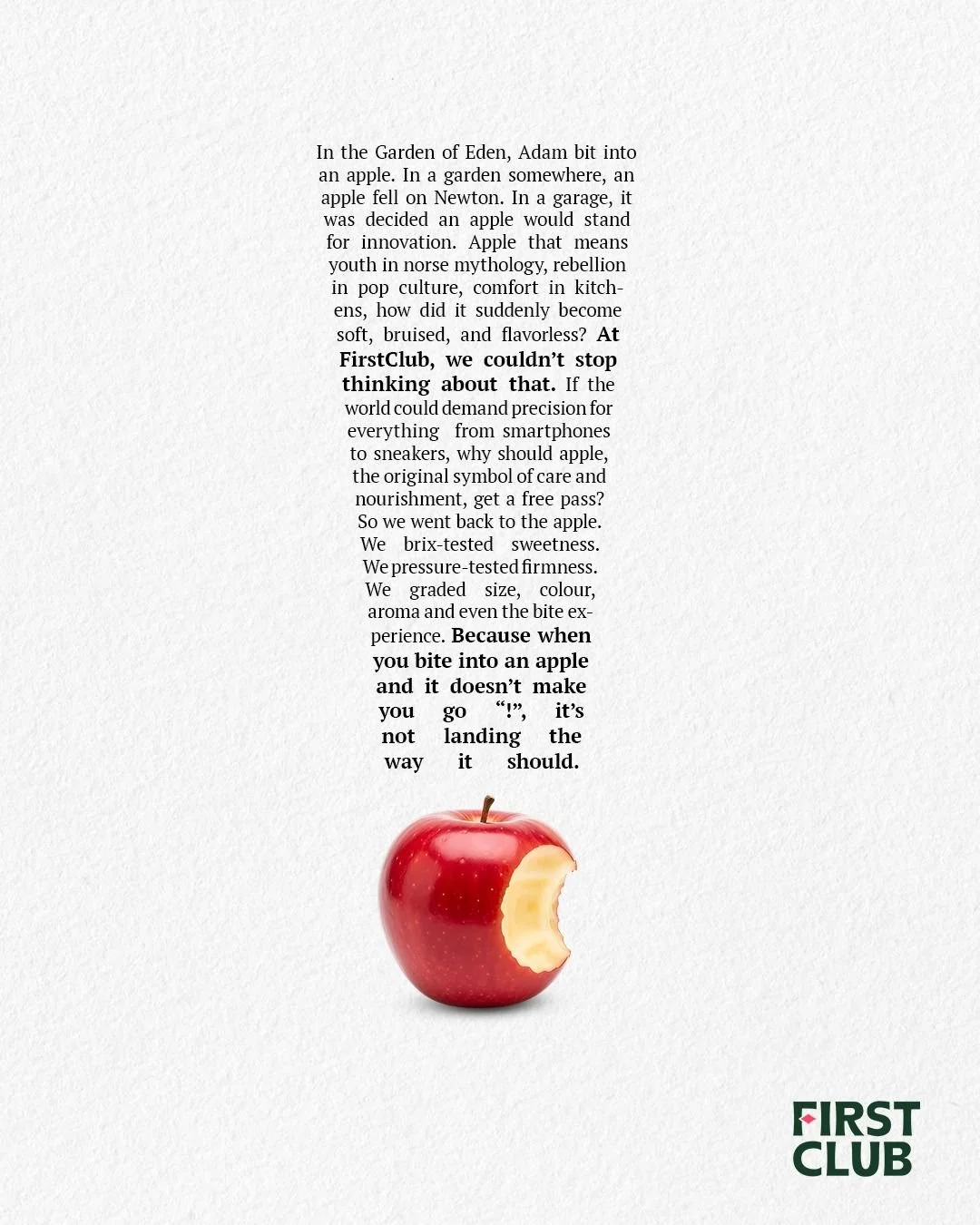
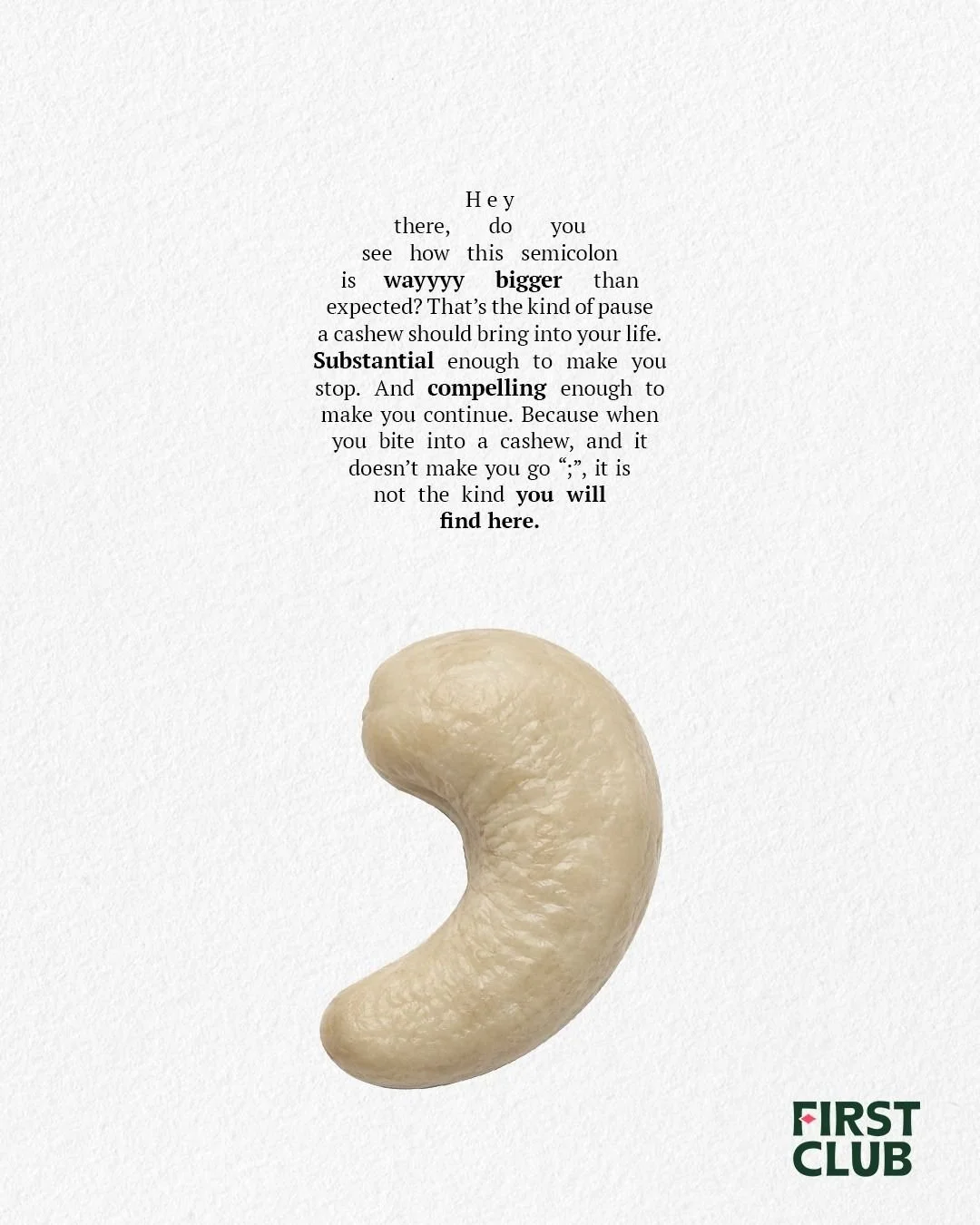
The starting point seemed straightforward enough. Food and punctuation. An apple could become an exclamation mark. A cashew looked remarkably like a comma. A cinnamon could become a forward slash.
Individually, the executions were interesting. Collectively, they felt less convincing.
The problem was consistency.
The apple worked one way. The cashew worked another. The pepper seemed to follow a different rule altogether.
In some cases, the food was becoming part of the punctuation mark. In others, the food was the punctuation mark.
The more the system developed, the more each execution seemed to require its own explanation.
And whenever that happens, it is usually worth pausing.
Because a campaign should ideally be governed by a single idea, not a collection of clever executions.
So the focus shifted away from the food altogether to the question: What does punctuation actually do? Not what does it look like, or what shape does it take.
What does it do?
A punctuation mark changes how a sentence lands. An exclamation mark creates surprise. A question mark creates curiosity. A semicolon creates a pause before continuation.
The symbols themselves are almost secondary. What matters is the experience they create.
That changed the direction of the thinking.
The question was no longer whether a cashew resembled a comma or whether an apple could complete an exclamation mark.
The more interesting question became: what reaction should each product create?
In fact, that’s is ultimately what FirstClub is trying to influence. The company is not simply sourcing groceries. It is trying to ensure food tastes the way it was meant to taste.
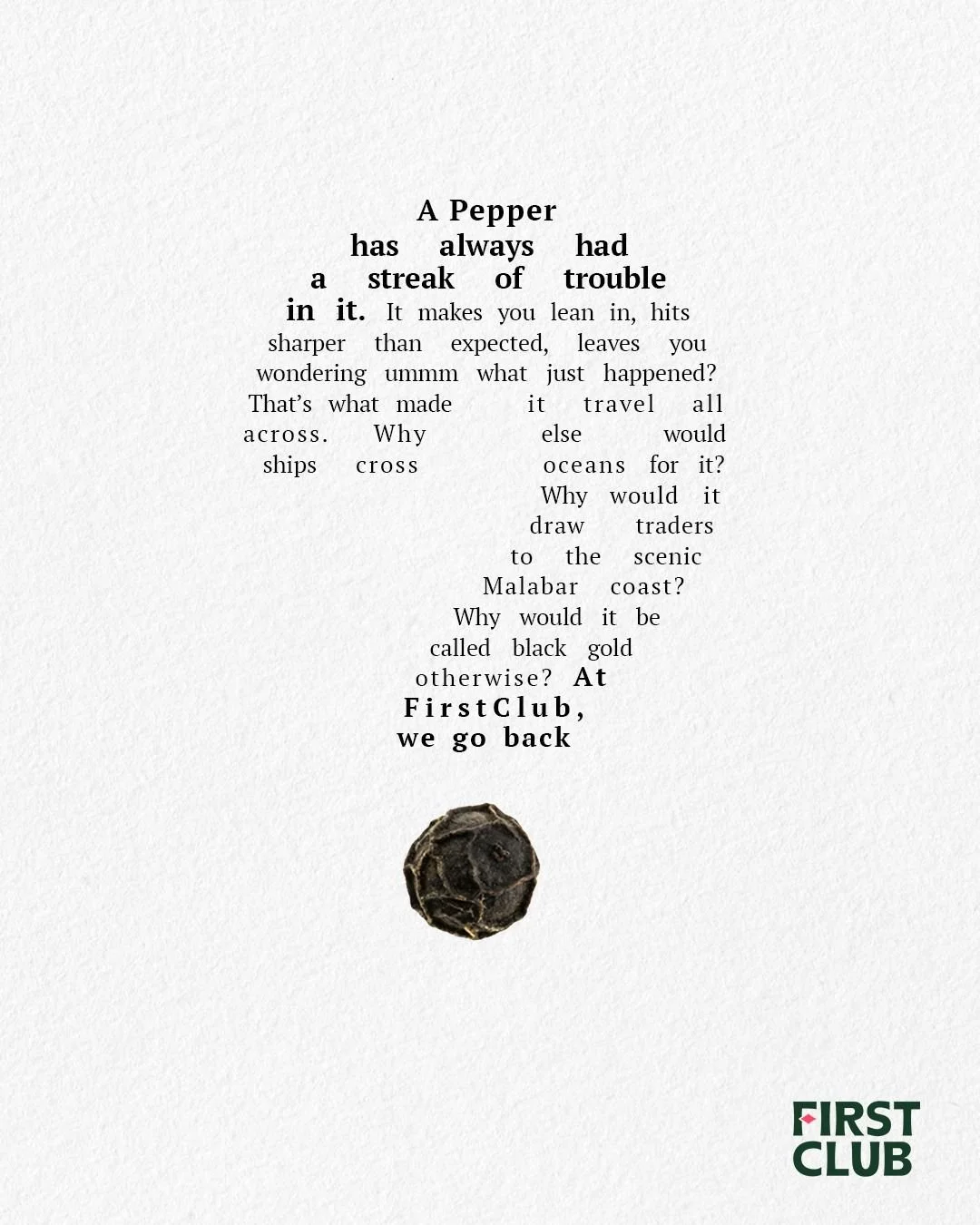
An apple should surprise with its sweetness and crunch. A cashew should make you pause before reaching for another. Pepper should make you wonder why pepper ever became an afterthought.
And suddenly the connection felt much stronger. Punctuation helps language land the way it was intended to. FirstClub helps taste land the way it was intended to. Both shape experience, create emphasis, make something more memorable.
The campaign became clearer the moment the focus moved from appearance to function. The punctuation marks were no longer visual devices borrowed for their shapes. They became expressions of the reactions great food is capable of creating. Surprise, Pause, and Curiosity. Which perhaps points to a larger truth about food itself.
Somewhere along the way, eating became something that happens while doing something else. Between meetings, or during calls, always in front of screens. But food was never meant to disappear into the background. The best food interrupts; it makes you stop for a second, and notice, and react too. Exactly the way a well-placed punctuation mark does.
FirstClub. Taste, punctuated.