
A Prescription for a Brownie
Here’s how most brownie packaging works: They tell you what flavour it is. Show you a very delicious-looking brownie. Tell you it is rich, fudgy, crunchy, indulgent, etc. Then leave you alone to decide whether you want it.
Which is perfectly functional!
But you cannot be a narrative studio and be okay with that.
Moreover, each time FirstClub comes with a brief, they expect us to push the envelope. Try something that hasn’t been done before.
This is what we love about clients that see (almost) everything as a content opportunity (i.e. an opportunity to establish a relationship with your consumer through the age-old human need for telling stories.) In this case, it was a small surface that can entertain, surprise or make someone feel something while they’re standing in an aisle deciding what to put in their basket.
So for the brownies with Tavon, we wanted the brownie to recognise you before it told you what was inside it.
The thought came from somewhere slightly unexpected.
I had previously run my own version of a Poetry Pharmacy workshop, a format originally created by poet and publisher William Sieghart, where people would come with feelings like loneliness, heartache, boredom, etc. and we collectively as a room would prescribe poems for them.
The idea was simple that sometimes you don’t need to fix a feeling. You just need something that says: yes, I know that feeling too.
Cut to brownies. Don’t we reach for them when we are feeling wonderfully significant and insignificant things?
A bad Monday.
A long Tuesday.
A brain that won’t switch off.
A tiny victory nobody else would understand.
A day when you simply feel like you deserve a brownie.
So we started treating the brownie like a prescription.
For the Choco Walnut Brownie, we wrote:
Recommended for overthinkers, deep thinkers, just thinkers, and anyone who believes the best ideas arrive somewhere between the first bite and the last.
And for the Rich Chocolate Brownie:
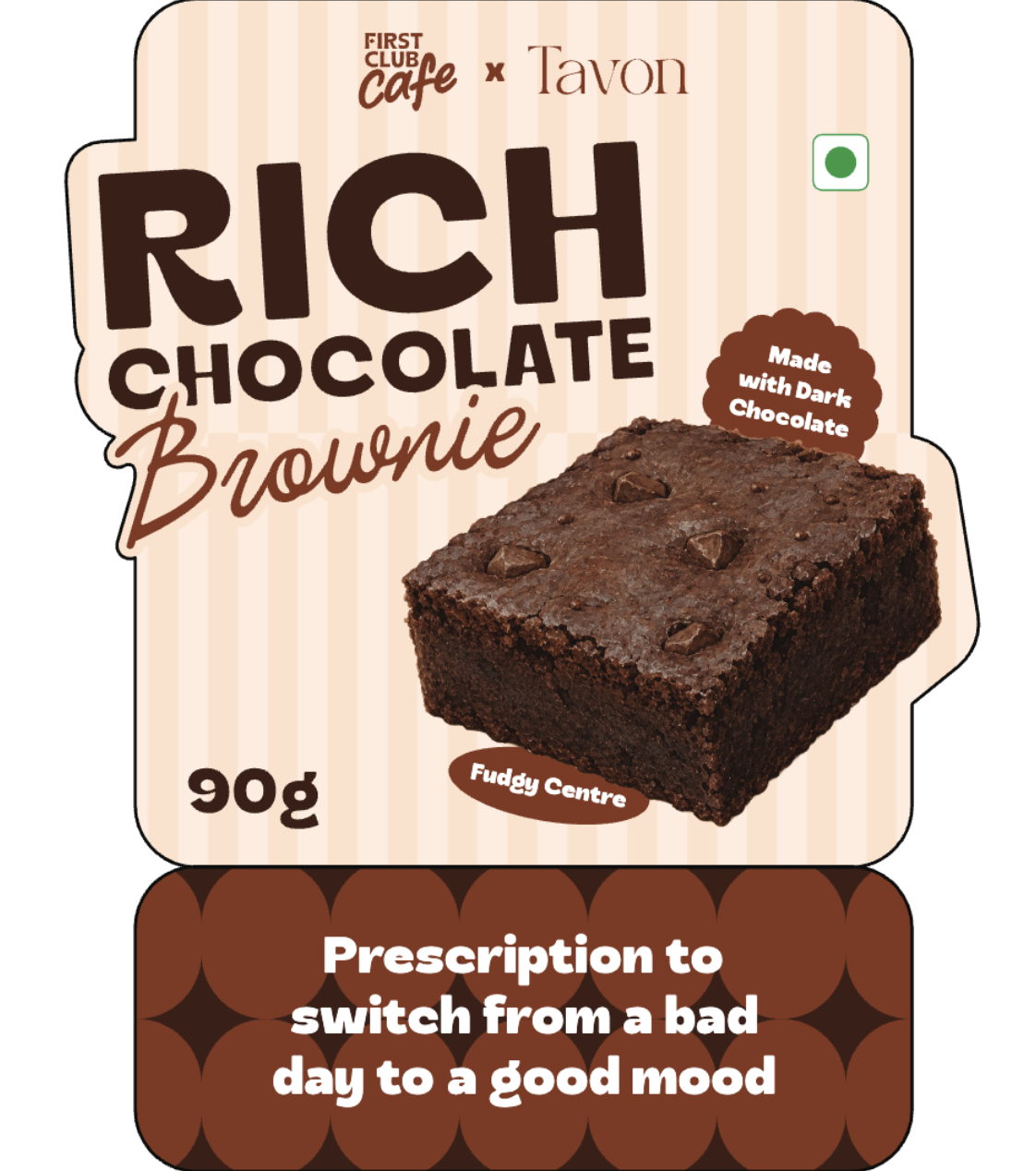
Recommended for long Mondays, short weekends, celebrated Tuesdays, and every “I deserve this” moment in between.
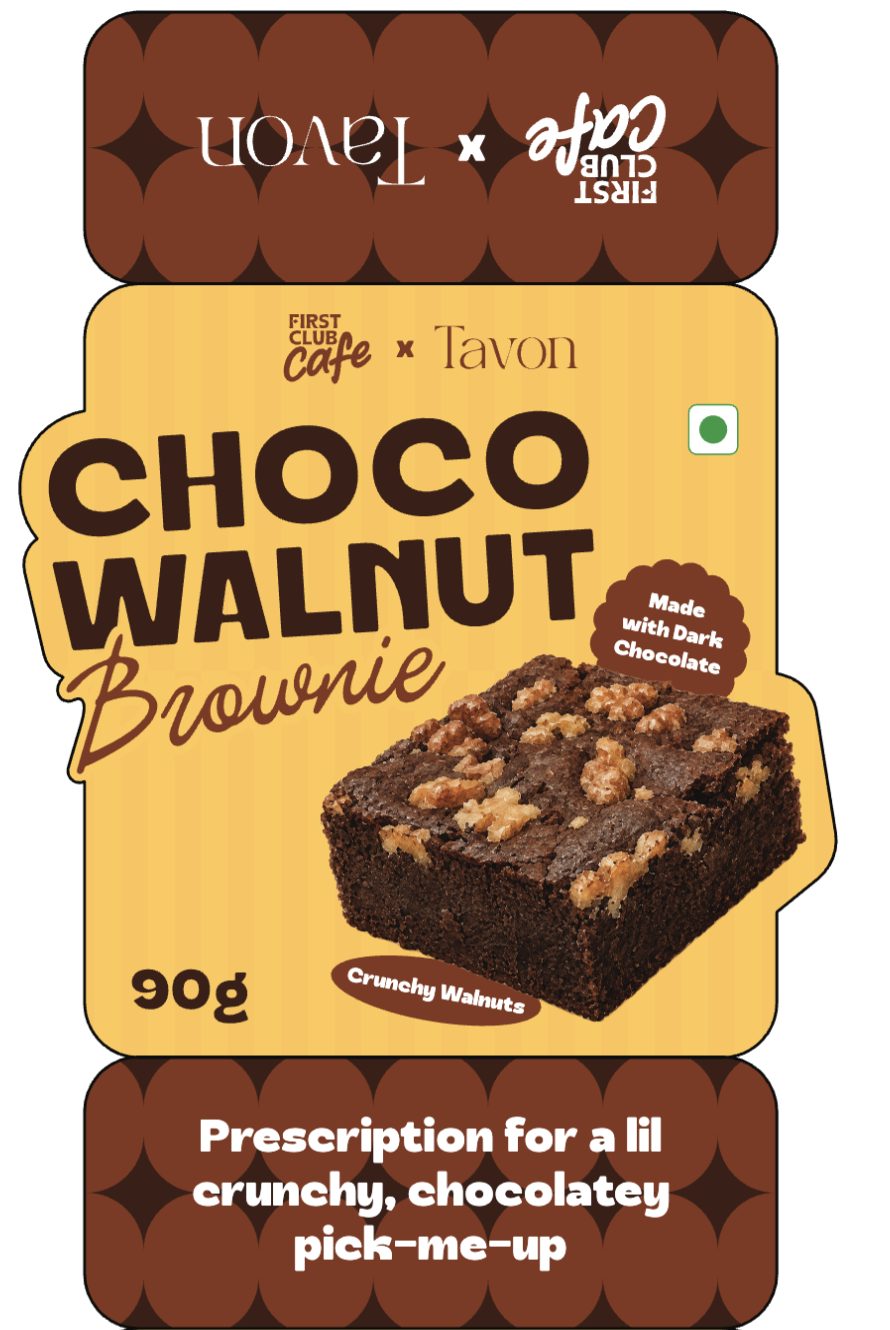
The idea was to make the product feel oddly specific because specificity is recognition. It’s why people check their horoscope and immediately find the one sentence that seems to have been written specifically for them. You want the brownie to do a tiny version of the same thing. Oh. This is me.
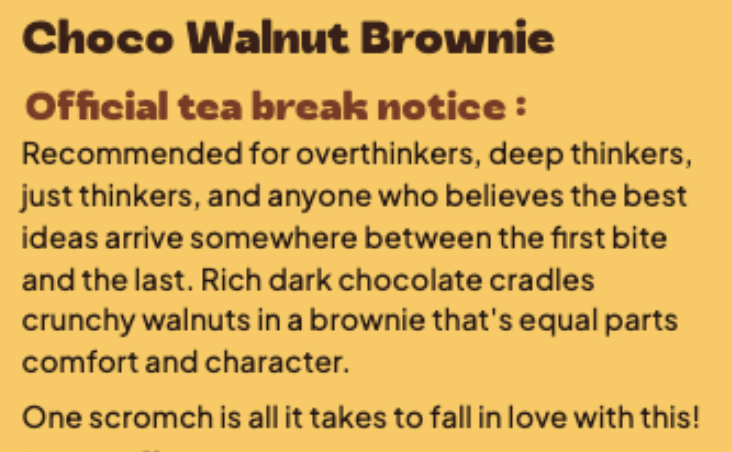
Then we built the rest of the pack around that little world. The side of the box became an “Official tea break notice.” The Rich Chocolate Brownie got a “Prescription to switch from a bad day to a good mood.” The Walnut Brownie got a “Prescription for a lil crunchy, chocolatey pick-me-up.”
And then there was “scromch.”
Someone younger on the team used the word. I had absolutely no idea what it meant. But it sounded exactly like the noise you make while devouring a brownie. So it became the anchor for the line with which we signed off each pack.
—
As creative people, we can very easily get carried away once we find an idea we like. But packaging has to work in seconds. Someone is holding the box, looking at the brownie, deciding whether they want it.
So the copy had to be short enough to read, entertaining enough to reward the reading, and simple enough that nobody felt like they needed to decode it.
The ingredient list was the starting material. Everything else became an opportunity to give the brownie a voice.
And maybe that’s what we liked most about the exercise. We didn’t really write copy about brownies. We wrote copy for the people who need one.
